Best Soft Pink
NYX Pale Pink
A lighter direction for subtle definition and a softer lip look.
Pink lip liners range from light and soft to rose, berry, mauve, and pink-brown. The best pink pencil depends on depth, undertone, and whether you want subtle definition, a versatile nude, or a richer pink that creates more contrast.
This guide starts with practical pink liner recommendations from the Niori shade library, then explains how depth and undertone change the way a pink liner reads on the lips.
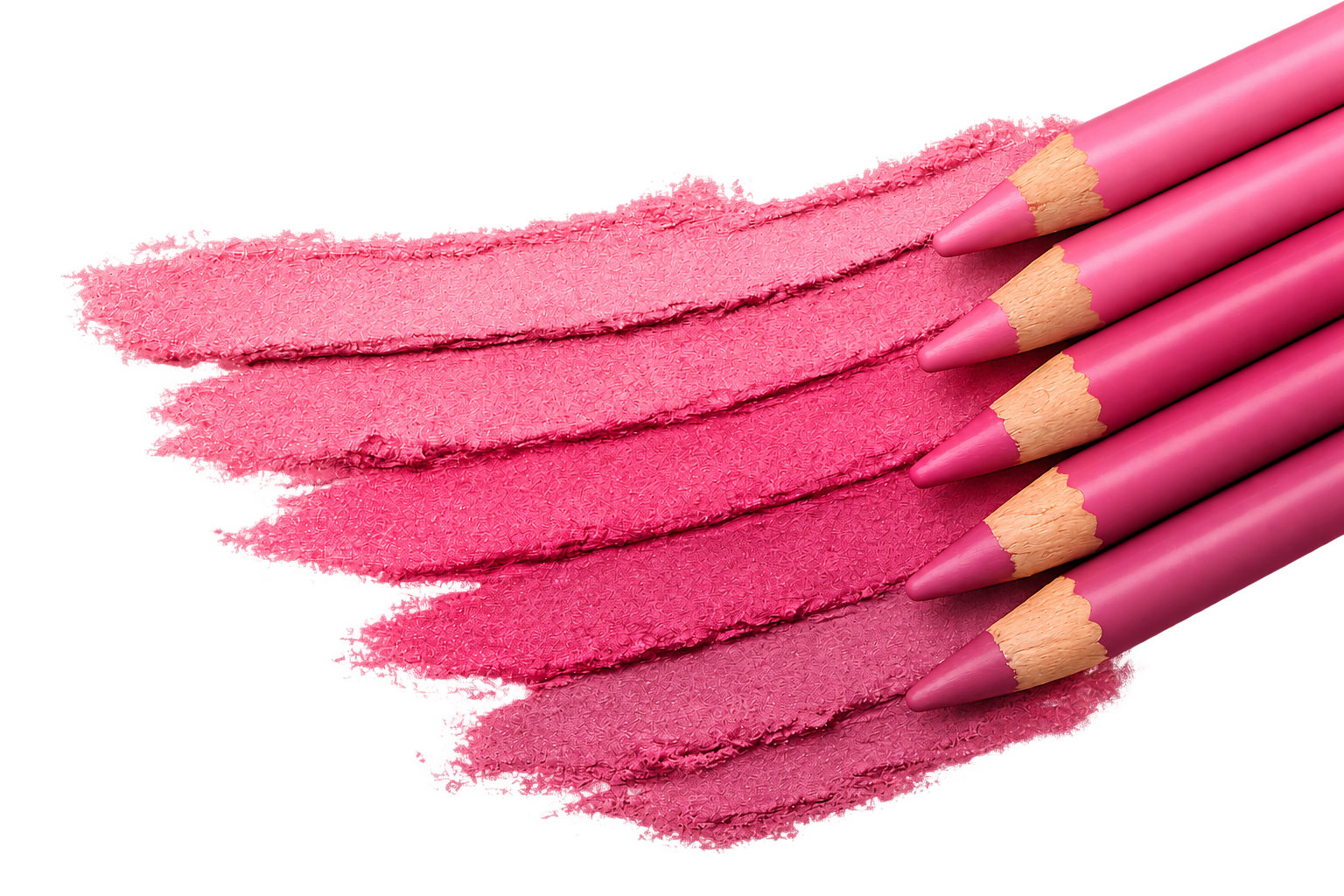
At a glance
NYX Pale Pink
A lighter direction for subtle definition and a softer lip look.
NYX Sand Pink
Keeps a clear pink identity without shifting too far into brown or purple.
NYX Natural
A grounded rose direction that can work like a pink-leaning nude.
ColourPop Bloom
Adds stronger contrast while staying within the richer pink family.
ColourPop Clinger
A cooler choice when brighter pinks feel too light.
Best pink lip liners
Start with the effect you want. These groups separate depth from undertone so you can narrow the options before comparing individual shades.
Lighter pinks that create subtle definition and sit closer to natural lip tone.
Start here when you want a low-contrast pink or a softly defined lip.
Flexible mid-depth pinks that can work as liner, all-over color, or a stronger nude.
These are useful everyday options, but undertone still determines whether they read rosy, warm, or muted.
Richer pinks with more contrast and often a stronger rose, berry, or brown influence.
Choose these when you want definition without moving fully into red, burgundy, or plum.
Shades that keep a recognizable pink character without too much brown or purple influence.
Start here if you want the liner itself to look distinctly pink.
Muted, grounded pinks with enough brown to feel softer and more natural on the lips.
Try this family when clean pink feels too bright or when you want a pink-leaning nude.
Cooler pinks deepened by berry or purple for a richer, more dramatic effect.
These can be especially useful when warm or bright pinks look too vivid on you.
Pink liner basics
Most pink lip liners start with red pigments that have been lightened, cooled, muted, or mixed with brown or purple. Pink is therefore less a single color than a range of related directions.
On the lips, pink liners can:
Two pencils can both be called pink while behaving very differently once worn. Undertone often explains why one looks fresh and clear while another feels muted, grounded, or dramatic.
These keep the clearest pink identity without a dominant brown or purple cast.
Brown or muted influence makes these softer, more grounded, and often easier to wear.
Purple or berry influence makes these cooler, richer, and usually more dramatic.
For more on temperature across color families, see the cool-toned lip liners guide.
Depth has a major impact on how much structure and contrast a pink liner creates.
If intensity is your priority, the saturated lip liners guide explains how saturation changes liner performance.
Bright pink is often less practical on the lips than it appears in theory. Many pencils are softened with brown, grey, or purple so they sit more naturally against the lip instead of reading as a vivid stripe of color.
This is why “pink” often includes soft rose, pink-brown, berry-pink, and muted mauve. Comparing the actual color is more useful than relying on the shade name alone.
If you are not sure where to start, use the effect you want as a shortcut:
Pink interacts strongly with natural lip tone, so the same pencil can appear more brown, purple, or vibrant from person to person. If lip colors often shift unexpectedly on you, see why lipstick turns orange.